

Blog
What Are Grow Bags?

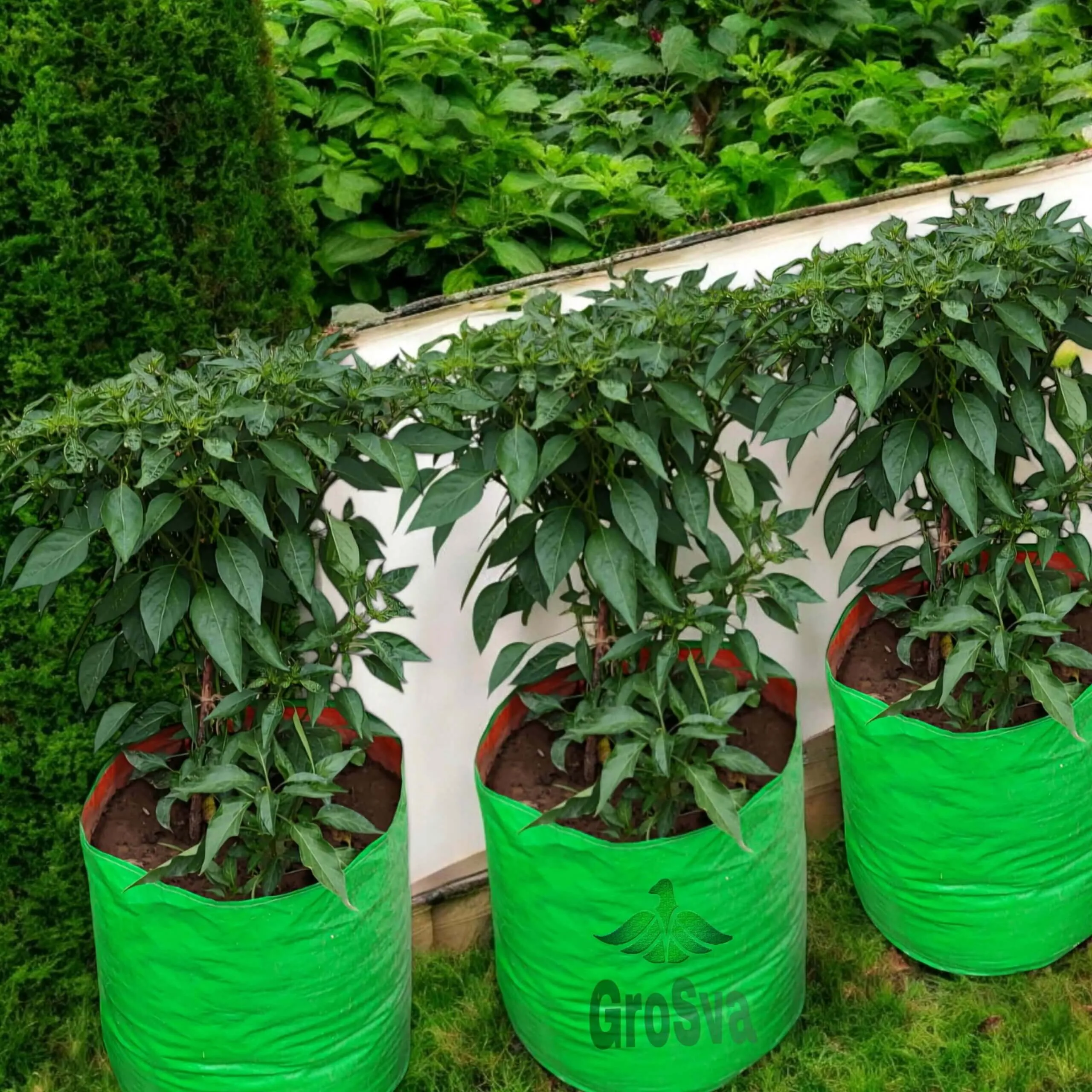
A grow bag is a plant container designed to hold growing media (soil, compost, coco peat, etc.) and support plant growth. It is widely used in home gardening, commercial nurseries, greenhouse farming, and terrace/balcony gardening as an alternative to traditional pots and ground planting.
Common Materials & Construction
1. Fabric Grow Bags (Most Popular)
- Material: Non-woven polypropylene (PP) fabric
- GSM (thickness):
- 180–220 GSM → basic home gardening
- 250–300 GSM → heavy-duty / commercial use
- Properties:
- Breathable and porous
- UV-stabilized (for outdoor use)
- Tear-resistant and reusable
- Color: Usually black, green, or brown
2. Plastic Grow Bags
- Material: LDPE or HDPE plastic
- Thickness: 150–300 microns
- Drainage: Pre-punched holes
- Use case: Short-term crops, nursery plants, low-cost setups
Standard Sizes & Capacity
Grow bags are specified by diameter × height or volume (liters):
| Size (inches) | Volume (approx.) | Typical Use |
| 6 × 6 | 8–10 L | Herbs, seedlings |
| 8 × 8 | 12–15 L | Leafy greens |
| 10 × 10 | 20–25 L | Chili, brinjal |
| 12 × 12 | 30–35 L | Tomatoes |
| 15 × 15 | 45–50 L | Potatoes |
| 18 × 18 | 60–70 L | Fruit plants |
| 24 × 24 | 100+ L | Small trees |
Drainage & Aeration Specifications
- Drainage holes:
- Fabric bags: natural porosity
- Plastic bags: 4–12 holes (5–10 mm diameter)
- Air pruning:
- Roots stop growing when they reach air, promoting lateral root growth
- Water retention:
- Lower than plastic pots → requires frequent watering
- Lower than plastic pots → requires frequent watering
Growing Media (Soil Mix) Specifications
Typical recommended mix:
- 40% garden soil
- 30% compost or vermicompost
- 20% coco peat
- 10% sand or perlite
pH range:
- 6.0 – 7.5 (ideal for most vegetables)
Load Capacity & Strength
- Fabric grow bags can support:
- 5–25 kg for small to medium sizes
- 40–100 kg for large bags
- Reinforced stitching for handles (if included)
Temperature & Climate Performance
- Fabric bags:
- Reduce root overheating
- Better suited for hot climates
- Plastic bags:
- Retain heat more
- Risk of root stress in extreme heat
Lifespan & Reusability
- Fabric grow bags:
- 2–5 years depending on GSM and UV exposure
- Plastic grow bags:
- 1–2 growing cycles
Common Applications
- Home & terrace gardening
- Balcony and rooftop farming
- Greenhouses and polyhouses
- Organic vegetable production
- Nursery propagation
Advantages (Technical Summary)
- Improved root oxygenation
- Reduced root circling
- Better drainage control
- Lightweight and foldable
- Cost-effective compared to ceramic pots
Limitations
- Faster moisture loss
- Requires frequent fertilization
- Lower insulation in cold climates
Typical Product Specifications (Example)
- Material: Non-woven PP fabric
- Size: 12 × 12 inches
- GSM: 250
- Color: Black
- Drainage: Breathable fabric
- Weight capacity: 30–35 kg
- Reuse: Up to 4 years
Grow bags are engineered containers that improve root health, drainage, and plant growth while being flexible, lightweight, and suitable for modern gardening needs—especially where space or soil quality is limited.
Frequently Asked Questions About Grow Bags
What is a grow bag?
A grow bag is a breathable fabric container used for growing plants. It improves air circulation, promotes healthy root growth, and prevents root circling.
What are grow bags used for?
Grow bags are used to grow vegetables, fruits, herbs, and flowers in balconies, terraces, rooftops, and home gardens.
Are grow bags better than pots?
Yes, grow bags provide better drainage and air pruning than traditional pots, helping plants grow healthier.
What size grow bag is best for vegetables?
A 10 to 15-gallon grow bag is ideal for most vegetables, while leafy greens can grow in smaller sizes.
What can you grow in grow bags?
You can grow tomatoes, potatoes, chilies, spinach, herbs, flowers, carrots, and many other plants.
Do grow bags need drainage holes?
No, grow bags do not need drainage holes. The fabric allows excess water to drain naturally.
How often should I water plants in grow bags?
Water when the topsoil feels dry. Grow bags usually need more frequent watering in hot weather.
Can grow bags be reused?
Yes, grow bags can be reused for multiple growing seasons if cleaned and dried properly.
Are grow bags safe for growing vegetables?
Yes, high-quality fabric grow bags are food-safe and free from harmful chemicals.
Are grow bags worth buying?
Yes, grow bags are affordable, space-saving, and ideal for home and terrace gardening.